
MegaWatts Heavy
Megawatt charging for semi fleets, on site in days.
Class 6–8 trucks, drayage and yard tractors. 150–400 kW per dispenser today, MCS-ready for 1 MW+ per truck.
- 1 MW+per power blockConfirm
- 7 daysto first chargeConfirm
- MCSready (IEC TS 63379)Confirm
MegaWatts Heavy delivers mobile megawatt-class DC fast charging for Class 6–8 electric truck fleets. Blocks of 350 kW to 1 MW+ with on-board storage arrive on site in days, charge trucks at 150–400 kW per dispenser on CCS1 today, and accept MCS dispensers under IEC TS 63379 as trucks with MCS inlets arrive.
The heavy-duty problem
Trucks are delivered on a truck schedule. Power is delivered on a utility schedule.
A 100-truck yard with 600 kWh packs needs 35 MWh a night. That is a medium-voltage service most yards do not have, and the queue to get one runs years. Meanwhile the trucks are on the lot, financed, and idle.
150–400 kW
Depot DCFC power per dispenser is the norm today; MCS is entering corridor deployment
200 / day
Truck charge cycles per day at the San Bernardino MCS hub, showing what megawatt charging does at scale
Starting point
Where a fleet like yours usually starts.
Recommended configuration
100-truck regional-haul yard
1 · Vehicles
100
600 kWh pack · 10 hr window
2 · Energy per day
35,000 kWh
350 kWh per vehicle
3 · Power required
3.8 MW
at 92% charger efficiency
4 · Power blocks
4 × 1 MW blockConfirm
4 MW installed
5 · Dispensers
13
350 kW each · 1.1 hr session
6 · Footprint
4,560 sq ftConfirm
blocks + dispenser lanes
7 · Days to live
11Confirm
from signed site plan
Planning estimate. Your Site Power Plan replaces every number here with a measured one within 48 hours.
Get a Site Power PlanCompared
The alternatives, priced honestly.
| Utility upgrade | Diesel generator rental | MegaWatts | |
|---|---|---|---|
| Time to power | 18–36 months for MV service | Days, but no DC chargers | Days, chargers includedConfirm |
| Upfront capex | $1M–$10M+ per depot | Low, plus fuel | Custom, quoted per site |
| Emissions on site | Grid mix | Diesel exhaust, permits | Battery-first, low-emission sourceConfirm |
| Noise | None | 70–85 dB continuous | Battery-quiet at the dispenser |
| Scales with the fleet | New service application per phase | More gensets, more fuel logistics | Add 1 MW blocks; MCS dispensers swap in |
| Written SLA | No | Rental terms only | Published, with credits |
| Exit when grid arrives | Is the grid | Stranded rental | Blocks relocate, no stranded asset |
Calculator
Size it yourself.
Quick sizing
Three numbers. One power figure.
Required on-site power
3.8 MW
- Energy per day
- 35,000 kWh
- BlocksConfirm
- 4 × 1 MW block
- Dispensers
- 13
- FootprintConfirm
- 4,560 sq ft
- Days to liveConfirm
- 11
- Session
- 1.1 hr
Specs that matter for trucks
What a heavy-duty deployment ships with.
- Per-dispenser power
- 150–400 kW CCS1, 1 MW+ MCS optionConfirm
- Connectors
- CCS1 · NACS · MCS-ready
- Cable reach
- Overhead or boom management for dual-cab accessConfirm
- Power sharing
- Dynamic allocation across dispensers on one block
- Telemetry
- OCPP 2.0.1 to your fleet system; ISO 15118 Plug & ChargeConfirm
- Yard fit
- Drive-through lanes, no reversing; trailer-sized padsConfirm
- Standards
- UL 1973Confirm
- UL 9540AConfirm
- UL 2202Confirm
- OCPP 2.0.1Confirm
- ISO 15118Confirm
- MCS / IEC TS 63379Confirm
- CARB / EPAConfirm
Example deployment
200-truck drayage yard
200 Class 8 electric drayage trucks, 10-hour overnight window, utility upgrade quoted at 24+ months.
Labeled example · not a case study
Port-adjacent yard, Southern California (example)
- · Trucks queue by return time; two dispenser lanes stay open for daytime top-ups.
- · Blocks parallel on a shared DC bus; add blocks as the fleet grows.
- · MCS dispensers swap in when trucks with MCS inlets arrive.
- Installed powerConfirm
- 8 MW
- Blocks
- 8 × 1 MW block
- Dispensers
- 25
- Energy per day
- 70,000 kWh
In the field
What shows up on site.
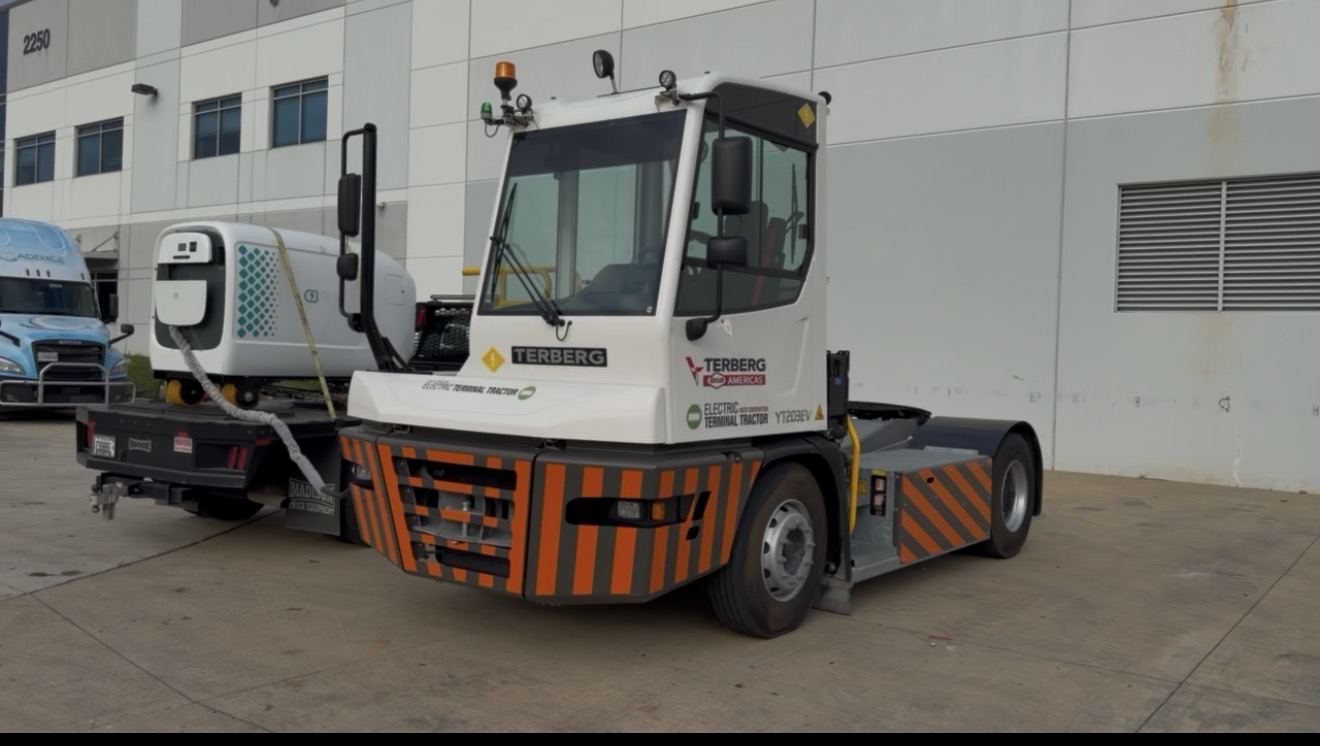
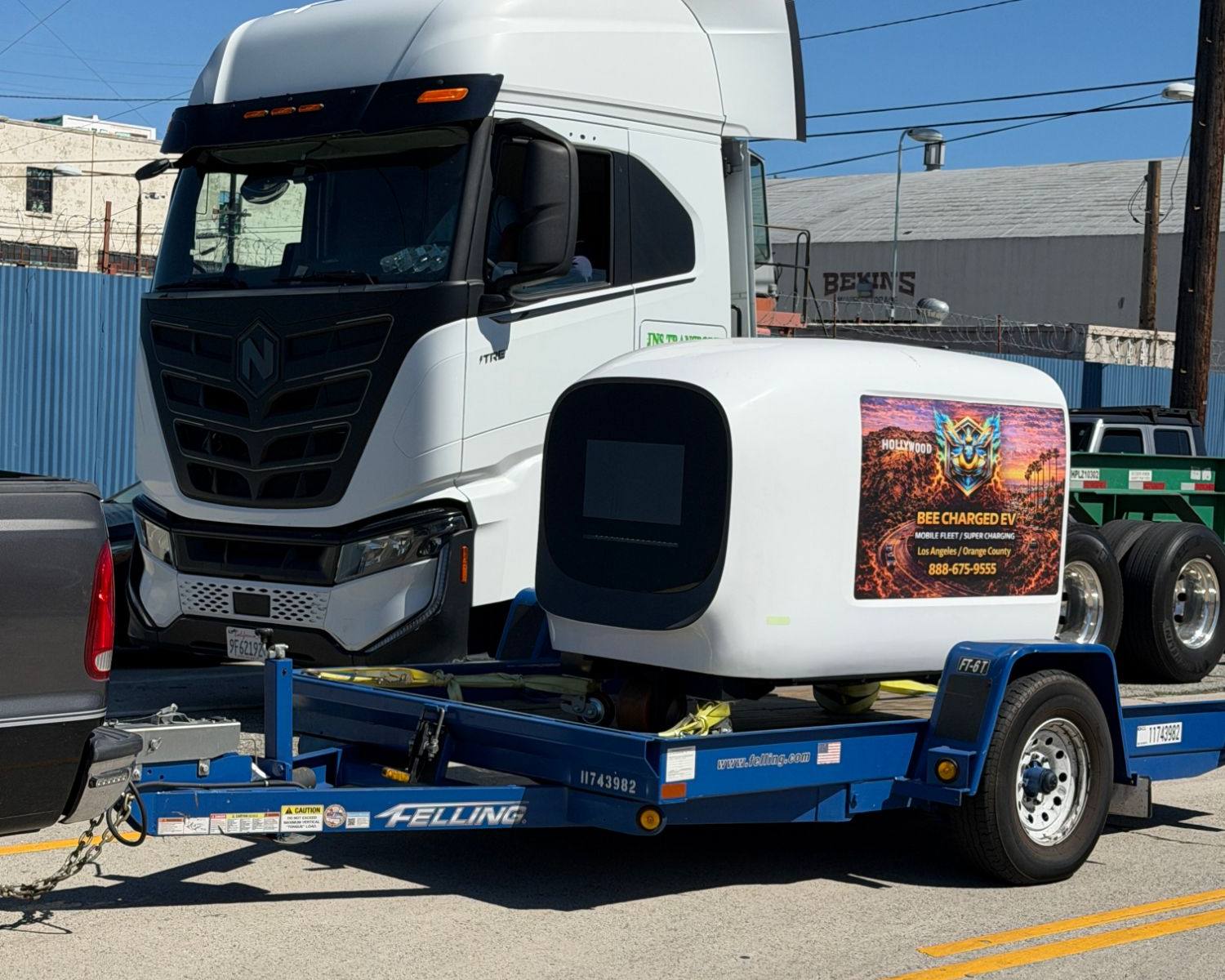
Electric yard tractor charging from a mobile trailer pod 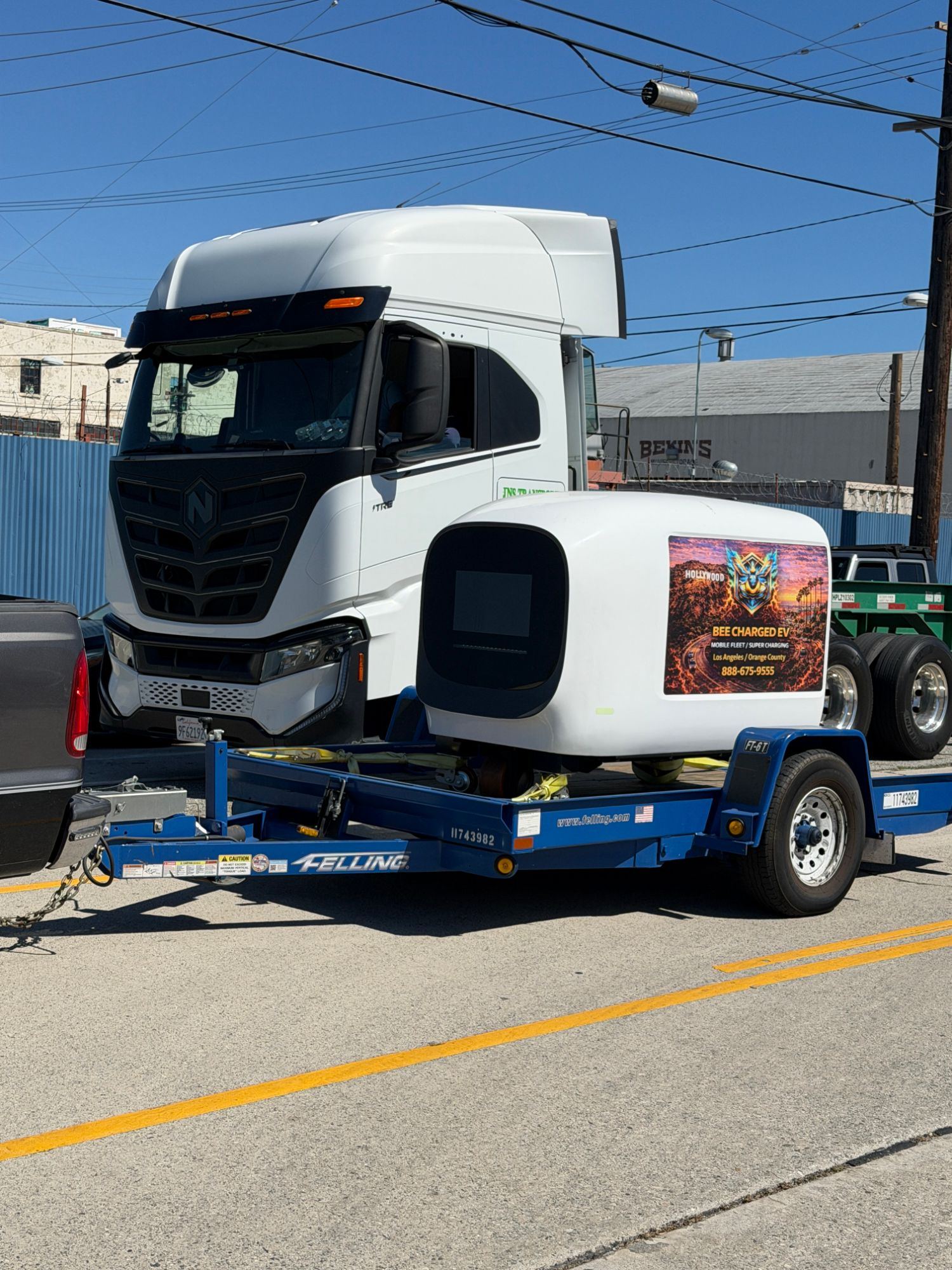
Mobile DC charging pod alongside a Class 8 electric tractor 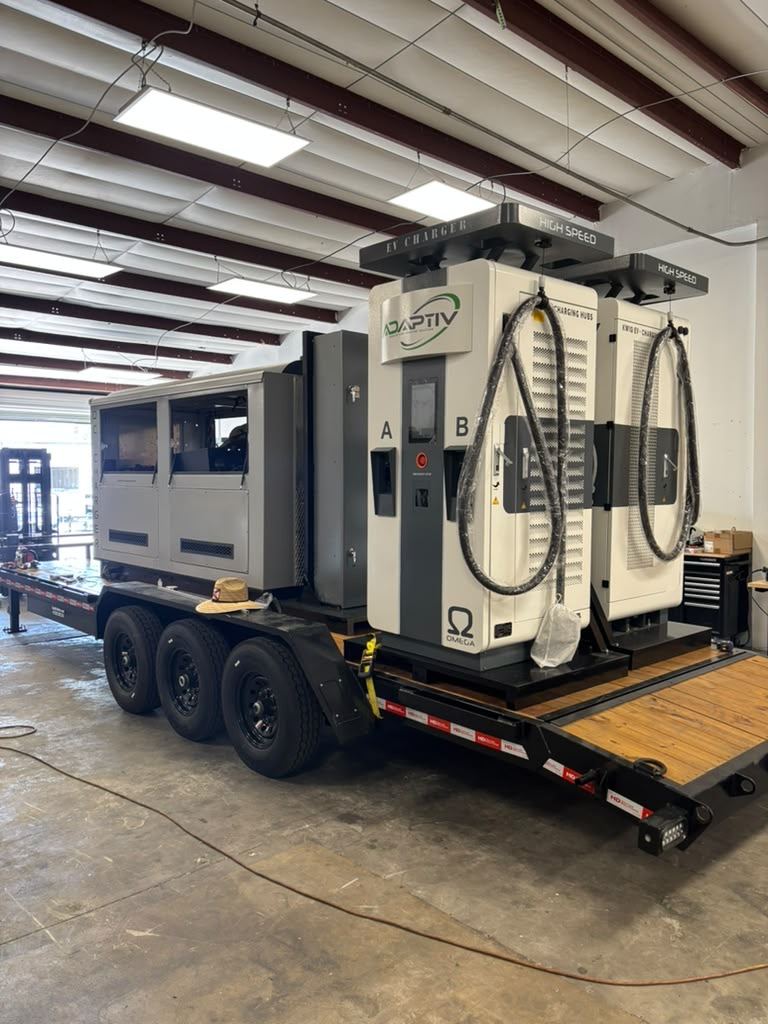
Power block and two dual-port dispensers on one trailer
FAQ
Semi & Heavy-Duty questions, answered.
Do we need permits for a mobile power block?
Usually a temporary-use or electrical permit for the pad and the dispenser lanes, which we file. Battery-first blocks avoid the air permits diesel gensets need. Founder to confirm permitting scope by state.
How loud is it at the dispenser?
Battery discharge is near-silent. If a generator tops up the block, it runs at the far end of the pad in an enclosure, not next to drivers.
What are the emissions on site?
Zero tailpipe at the dispenser. If generation is used, the energy source is disclosed in your Site Power Plan with the CARB or EPA tier. Founder to confirm the energy sources offered.
Is the equipment insured?
Yes. A certificate of insurance is issued on request for every deployment, and battery safety and liability terms are in the SLA.
What contract term is required?
Term length is set in your quote, from a short pilot up to a multi-year agreement. Blocks relocate at term end without a stranded asset.
When will MCS be available?
The 1 MW+ block is designed for an MCS dispenser option under IEC TS 63379. The delivery date is set by the founder; until then, 350–400 kW per truck on CCS1 covers most overnight windows.
Start here
Get a semi & heavy-duty Site Power Plan in 48 hours.
kW, kWh, blocks, layout and days-to-live for your site. Free, whether or not you buy. Three fields to start.
Prefer the phone?
888-675-9555