
On-Site Power
The megawatts behind the chargers.
Battery storage first, low-emission generation when needed, grid-tied when possible. Sized to your fleet window, not to the utility queue.
- 2 MWhstorage per 1 MW blockConfirm
- 0trenching or switchgear
- CARB/EPAcompliant generationConfirm
MegaWatts On-Site Power is the energy system behind megawatt-class mobile fleet charging: on-board battery storage in every block, recharged from a small grid service, low-emission on-site generation or scheduled delivery. It lets fleets of 50 or more vehicles charge at megawatt rates on sites where the utility cannot deliver the load for months or years.
Energy sources
Three ways to fill the battery.
Preferred
Grid-tied hybrid
Connect to whatever service exists, even 100–200 kW. The battery charges around the clock and discharges at megawatt rates during the fleet window.
ConfirmConfirm
Low-emission generation
Tiered generation in an enclosure at the far side of the pad, run only to top up storage. Fuel options and emissions tier stated per site.
ConfirmConfirm
Scheduled energy delivery
Charged blocks swapped or topped up on a schedule for sites with no service and no permit path for generation.
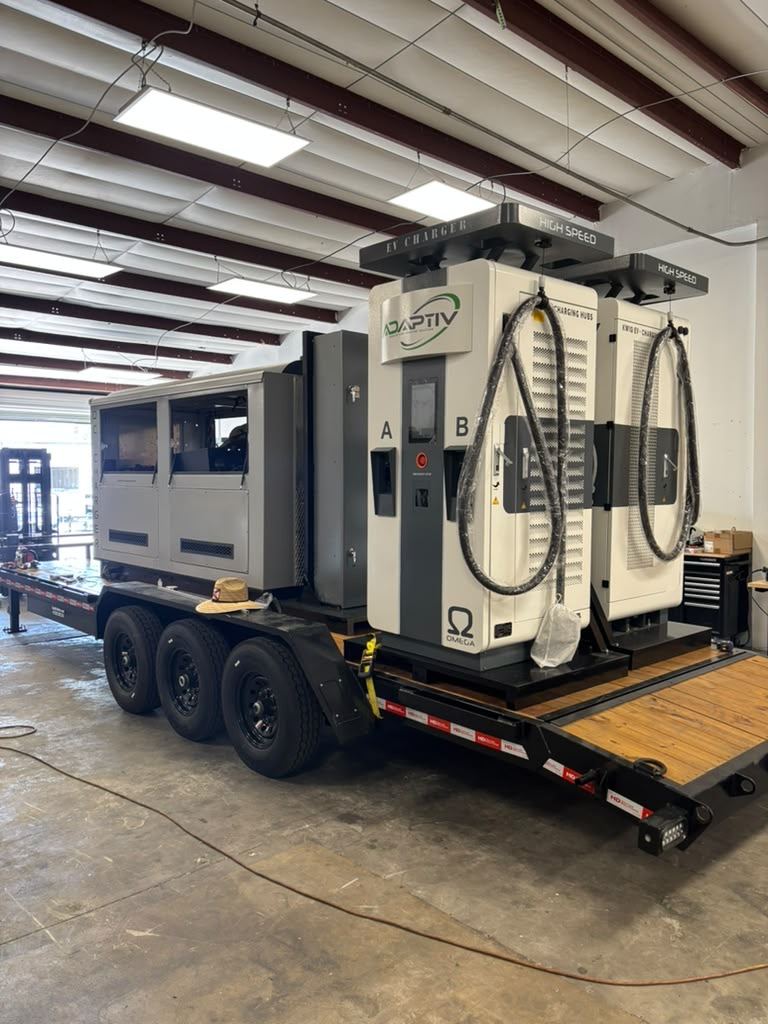
One trailer
Power unit and dispensers travel together.
The enclosed power unit sits at the front of the trailer, the DC dispensers at the back. Level the pad, connect the bus, and the site is live. No separate generator rental, no second delivery.
Storage
Why battery-first.
Flat load in, megawatt out
A 200 kW service delivers 4,800 kWh a day. That is 12 trucks at 400 kWh, charged at 350 kW each, from a service most yards already have. Storage turns hours into kilowatts.
Fewer generator hours, fewer permits
Generation runs only when storage cannot cover the window. Battery-quiet at the dispenser, enclosed generation at the pad edge, and a runtime log for compliance.
Why now
The queue is not getting shorter.
2,600 GW
Generation and storage capacity waiting in US interconnection queues.
18–36 mo
Major grid work timelines for depot service upgrades.
- Standards
- UL 1973Confirm
- UL 9540AConfirm
- CARB / EPAConfirm
FAQ
On-site power questions.
Which energy sources do you offer?
The block battery is always first. It recharges from whichever source the Site Power Plan specifies: a small existing grid service, a low-emission generator, or scheduled energy delivery. The founder confirms the sources advertised publicly.
Is on-site generation permitted at our site?
Air permits depend on state and generator tier. Battery-first design minimizes generator runtime, and we file the permits in scope. CARB and EPA compliance is stated per deployment.
Can the storage also provide backup power?
Yes for the charging load. Backup for building loads is a separate scope and quoted in the plan.
How does storage reduce demand charges?
Batteries absorb energy off-peak from a small service and discharge at megawatt rates during the fleet window, so the utility sees a small, flat load instead of a megawatt spike.
What about grid-tied hybrid sites?
Blocks connect to an existing service of any size and top up continuously. A 200 kW service can support a 1 MW fleet window if the storage is sized for the daily energy.
Start here
Find out what your service can already support.
kW, kWh, blocks, layout and days-to-live for your site. Free, whether or not you buy. Three fields to start.
Prefer the phone?
888-675-9555