
MegaWatts Lot
Ship every new EV charged. Ports, rail and OEM lots.
Thousands of units at 0–20% state of charge at factories, ports and railheads. We bring the megawatts to the lot.
- 5,000 +units per lot configurationConfirm
- 0 $upfront capex
- 7 daysto first chargeConfirm
MegaWatts Lot brings megawatt-class mobile charging to OEM vehicle lots, import ports and rail auto terminals so new EVs ship at the required state of charge. 1 MW+ blocks at the lane heads feed lane-cart dispensers, staff plug in during processing, and every unit gets a per-VIN SOC record for the OEM's logistics system.
The vehicle-logistics problem
Thousands of new EVs at 10% state of charge cannot ship, cannot move, and cannot wait for a substation.
Vehicle processing centers were never wired for megawatts. Utility upgrades at ports and railheads run years and involve landlords, port authorities and utilities. The vehicles keep arriving.
8–18 mo
First-time site electrification timeline, before any charger is energized
Critical path
Grid constraints are the binding constraint for fleet and logistics electrification in 2025–26
Starting point
Where a fleet like yours usually starts.
Recommended configuration
2,000 units charged per day
1 · Vehicles
2,000
90 kWh pack · 16 hr window
2 · Energy per day
90,000 kWh
45 kWh per vehicle
3 · Power required
6.1 MW
at 92% charger efficiency
4 · Power blocks
7 × 1 MW blockConfirm
7 MW installed
5 · Dispensers
61
150 kW each · 0.3 hr session
6 · Footprint
12,570 sq ftConfirm
blocks + dispenser lanes
7 · Days to live
17Confirm
from signed site plan
Planning estimate. Your Site Power Plan replaces every number here with a measured one within 48 hours.
Get a Site Power PlanCompared
The alternatives, priced honestly.
| Utility upgrade | Diesel generator rental | MegaWatts | |
|---|---|---|---|
| Time to power | Years at ports and railheads | Days, no chargers | Days, dispensers includedConfirm |
| Upfront capex | $1M–$10M+ per depot | Low, plus fuel | Custom, quoted per site |
| Emissions on site | Grid mix | Diesel exhaust, permits | Battery-first, low-emission sourceConfirm |
| Noise | None | 70–85 dB continuous | Battery-quiet at the dispenser |
| Scales with volume | Fixed capacity per service | Fuel and noise scale badly | Seasonal blocks for surge months |
| Written SLA | No | Rental terms only | Published, with credits |
| Exit at season end | Capex stays | Rental returns | Blocks relocate, seasonal terms |
Calculator
Size it yourself.
Quick sizing
Three numbers. One power figure.
Required on-site power
6.7 MW
- Energy per day
- 99,000 kWh
- BlocksConfirm
- 7 × 1 MW block
- Dispensers
- 65
- FootprintConfirm
- 13,050 sq ft
- Days to liveConfirm
- 17
- Session
- 0.4 hr
Specs that matter for lots
What a lot deployment ships with.
- Dispensers
- Lane-cart dispensers, 50–150 kW, moved to the vehiclesConfirm
- Connectors
- NACS · CCS1
- Reporting
- Per-VIN start/end SOC, kWh, timestamp, daily export
- Throughput
- Sized to units per day and target SOC, not to a fixed port count
- Terms
- Seasonal and surge terms in addition to 6–36 monthsConfirm
- Safety
- Lot-speed lane plans, COI, UL-listed blocksConfirm
- Standards
- UL 1973Confirm
- UL 9540AConfirm
- UL 2202Confirm
- OCPP 2.0.1Confirm
- ISO 15118Confirm
- CARB / EPAConfirm
Example deployment
5,000-unit OEM port lot
5,000 new EVs arriving at 10–20% state of charge; every unit must ship at 70%+ within 16 hours of processing.
Labeled example · not a case study
Import port vehicle processing center (example)
- · Sized for 2,000 units charged per day across a 5,000-unit lot.
- · Dispensers on lane carts so lot layout stays flexible.
- · Per-unit SOC report exported to the OEM's logistics system.
- Installed powerConfirm
- 7 MW
- Blocks
- 7 × 1 MW block
- Dispensers
- 61
- Energy per day
- 90,000 kWh
In the field
What shows up on site.
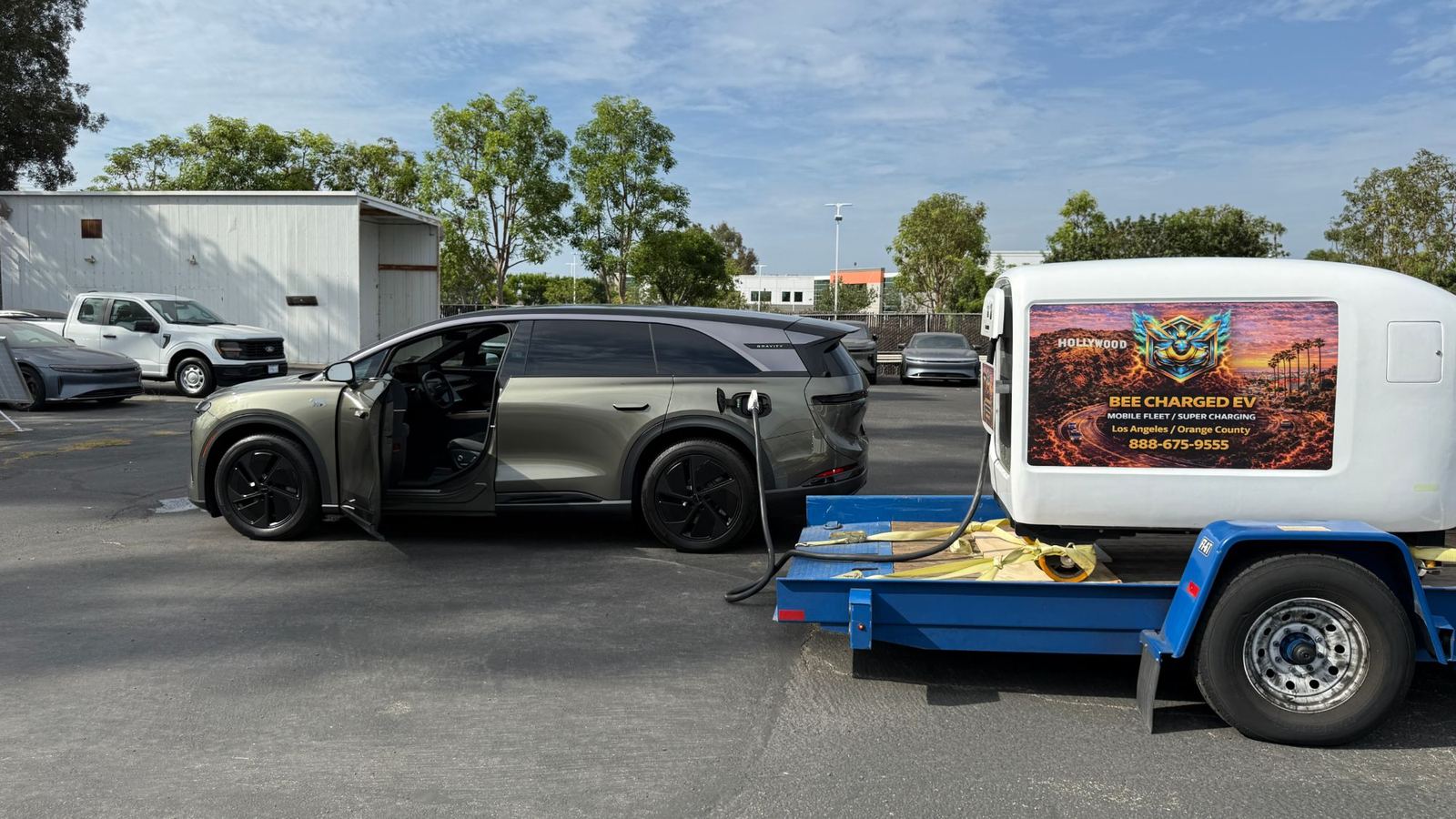
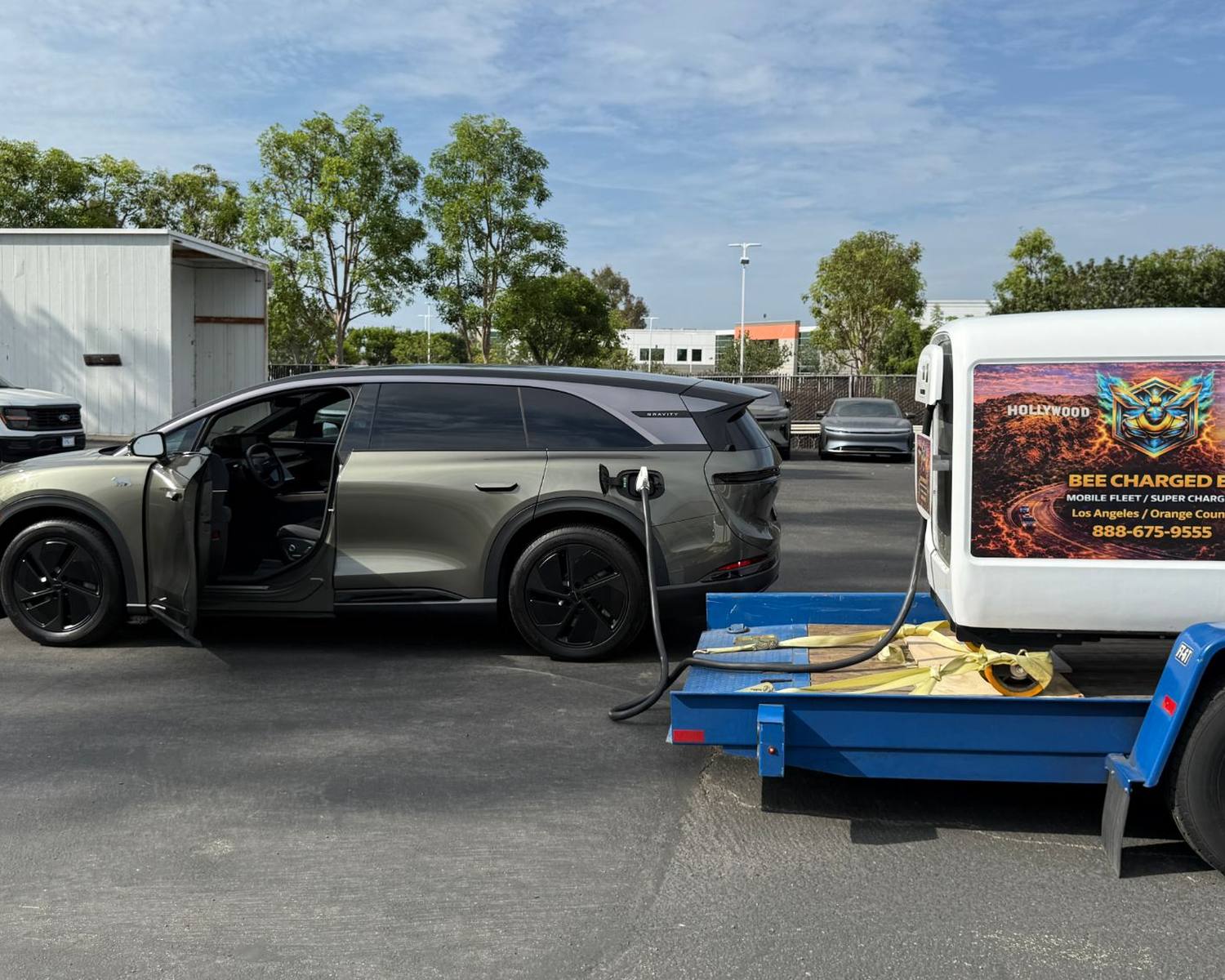
Trailer pod charging a new vehicle on the lot 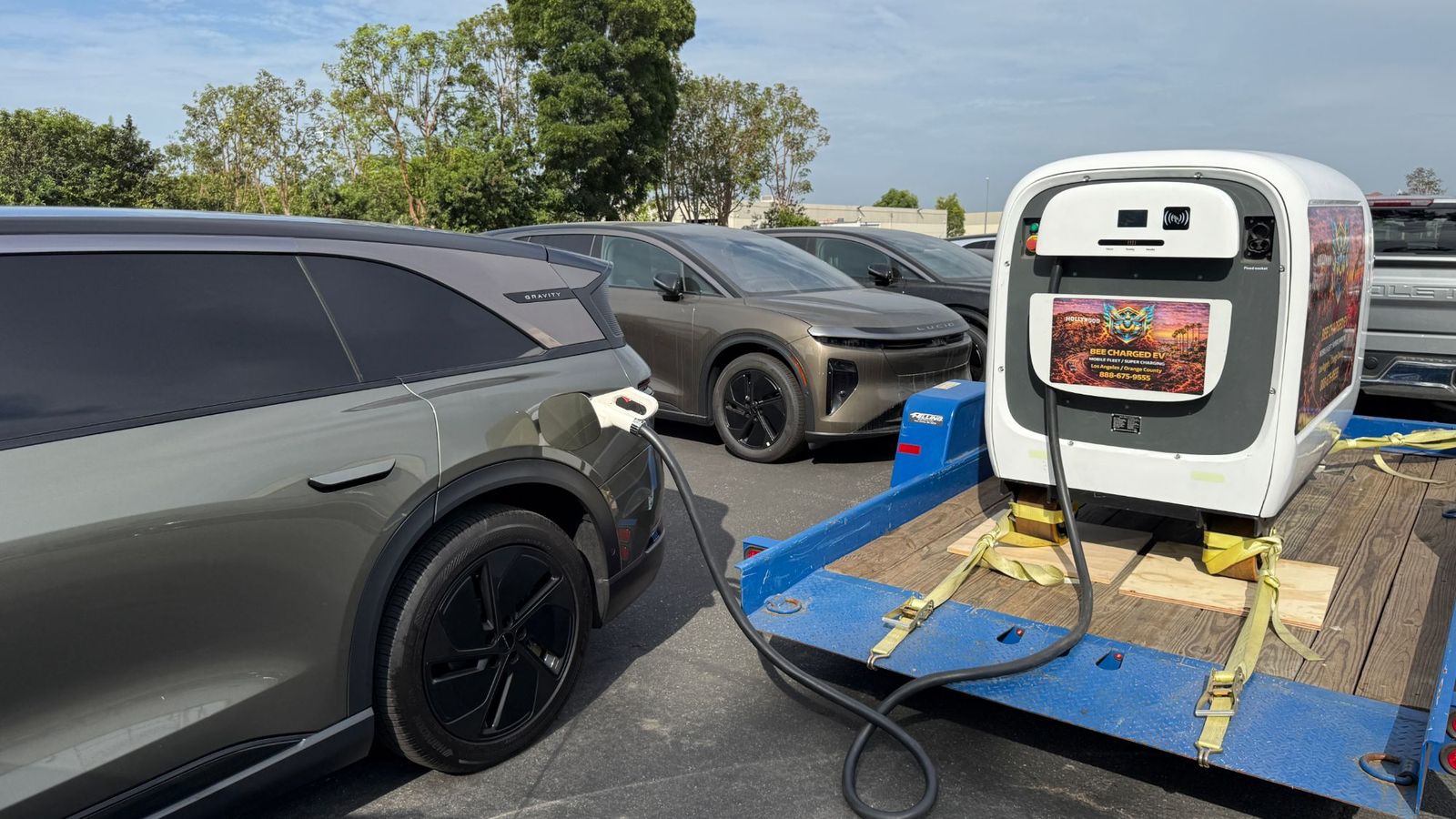
New vehicles charged on the lot from a trailer block 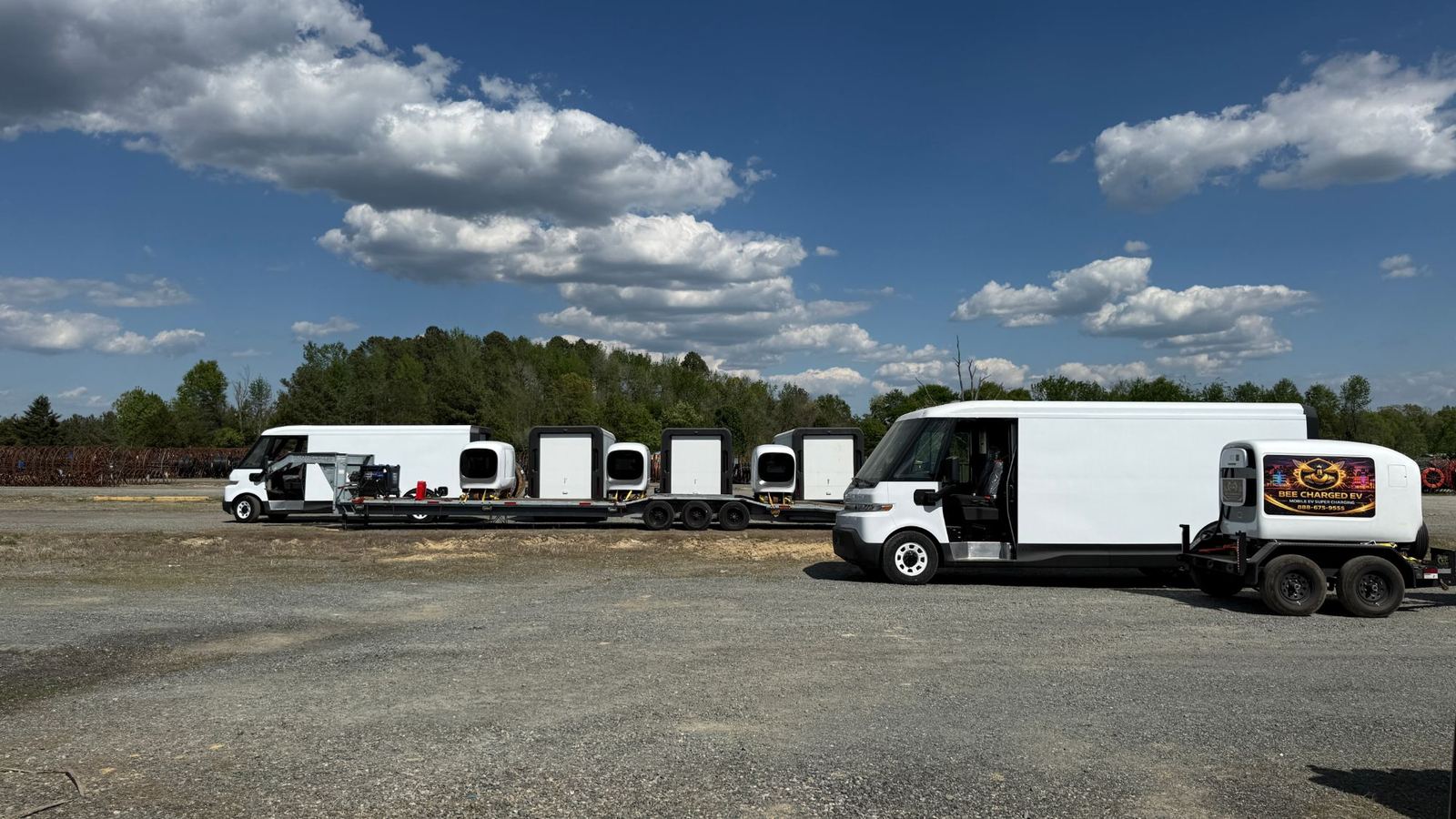
Delivery vans and mobile charging pods staged in a yard
FAQ
OEM Lots questions, answered.
How do you charge thousands of units without moving them?
Dispensers on lane carts move to the vehicles. Blocks sit at the lane heads. Lot staff plug in during processing, and each unit's SOC is logged.
What SOC do you target?
Whatever your shipping standard requires, typically 60–80%. The Site Power Plan sizes energy for your arrival SOC, target SOC and units per day.
Does this work at rail auto terminals and ports?
Yes. The blocks are transportable and need only a level pad, truck access, and a dispenser lane plan that fits the terminal's traffic flow.
Who is liable for the vehicles?
Your existing lot liability and insurance stay in place. Our COI covers the charging equipment and our staff.
How long is the commitment?
Seasonal and surge terms are available in addition to 6–36 month agreements, because lot volumes swing.
Do you provide reporting per VIN?
Yes. Session, kWh and end SOC per unit, exported to your logistics system or as a daily file.
Start here
Get a oem lots Site Power Plan in 48 hours.
kW, kWh, blocks, layout and days-to-live for your site. Free, whether or not you buy. Three fields to start.
Prefer the phone?
888-675-9555