
MegaWatts Autonomous
Hundreds of DC ports for robotaxi depots, without the wait.
24/7 autonomous depots need relocatable power now and a hands-free charging path later. We deliver both.
- 24/7NOC-monitored operation
- 150 kWper port, 40+ ports per blockConfirm
- ≤24 hrissue responseConfirm
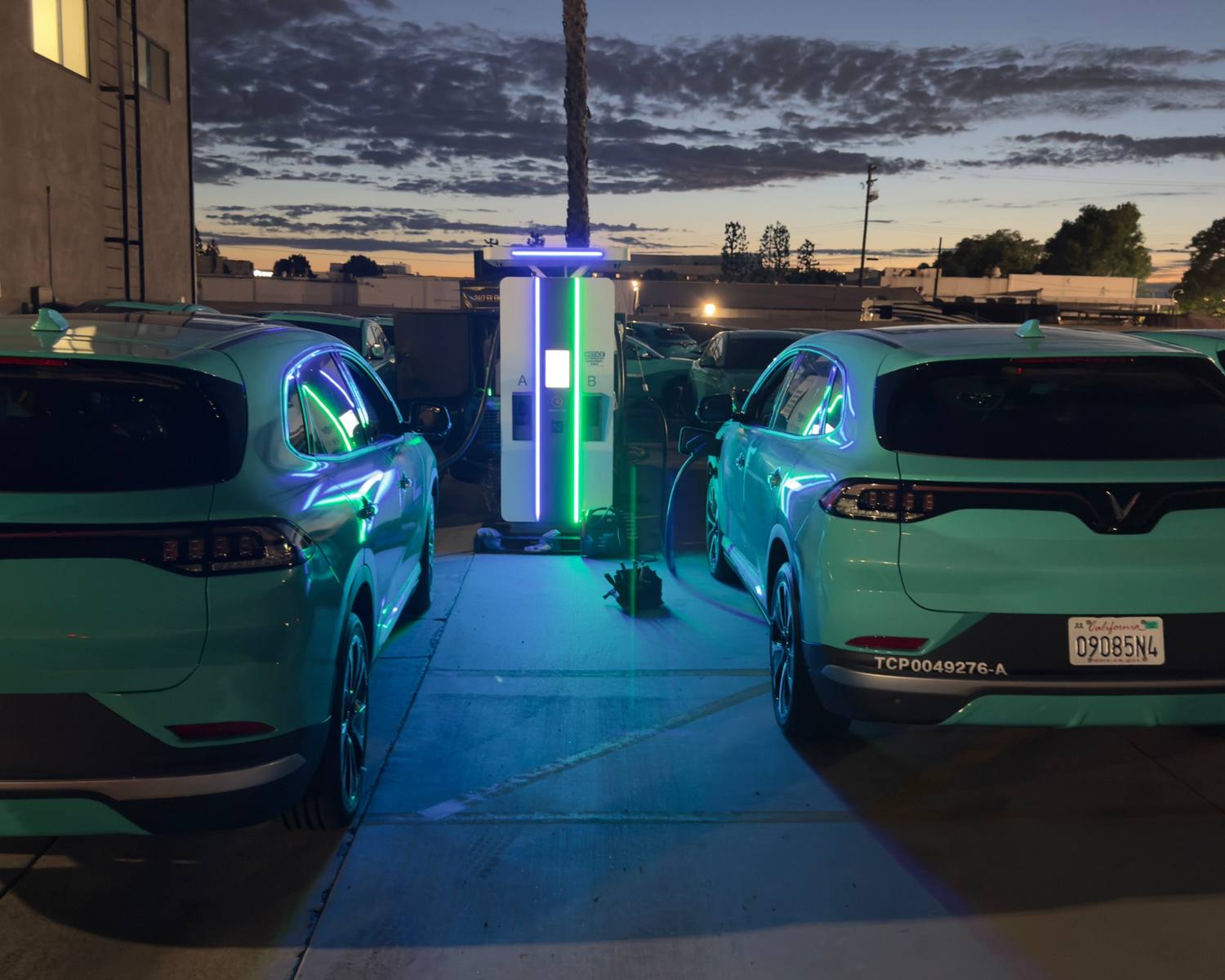
MegaWatts Autonomous supplies relocatable megawatt power and hundreds of DC ports for robotaxi and autonomous vehicle depots. Blocks of 700 kW to 1 MW+ feed 150 kW ports with dynamic power sharing, run under 24/7 network operations, integrate over OCPP 2.0.1, and are laid out for attendant plug-in today with a wireless or robotic upgrade path.
The autonomous problem
The fleet runs 24/7. The vehicles cannot plug themselves in. The depot lease forbids trenching.
Robotaxi depots need hundreds of ports, staggered around the clock, in real estate the operator does not own for long. Permanent switchgear is the wrong answer for a depot that may move in 18 months.
≈7,100
Robotaxis authorized in Clark County, Nevada across four operators, each needing depot charging
0
Robotaxis that plug themselves in today; fleet operators handle charging and maintenance
Starting point
Where a fleet like yours usually starts.
Recommended configuration
300-vehicle robotaxi depot
1 · Vehicles
300
80 kWh pack · 20 hr window
2 · Energy per day
16,800 kWh
56 kWh per vehicle
3 · Power required
914 kW
at 92% charger efficiency
4 · Power blocks
2 × 700 kW blockConfirm
1.4 MW installed
5 · Dispensers
9
150 kW each · 0.4 hr session
6 · Footprint
2,280 sq ftConfirm
blocks + dispenser lanes
7 · Days to live
7Confirm
from signed site plan
Planning estimate. Your Site Power Plan replaces every number here with a measured one within 48 hours.
Get a Site Power PlanCompared
The alternatives, priced honestly.
| Utility upgrade | Diesel generator rental | MegaWatts | |
|---|---|---|---|
| Time to power | 8–36 months | Days, but not chargers | DaysConfirm |
| Upfront capex | $1M–$10M+ per depot | Low, plus fuel | Custom, quoted per site |
| Emissions on site | Grid mix | Diesel exhaust, permits | Battery-first, low-emission sourceConfirm |
| Noise | None | 70–85 dB continuous | Battery-quiet at the dispenser |
| Scales with the fleet | Re-permit for each phase | Not a charging system | Add a block, add 40 ports |
| Written SLA | No | Rental terms only | Published, with credits |
| Exit when the depot moves | Switchgear stays with the landlord | Rental returns, chargers do not exist | Blocks and ports relocate in days |
Calculator
Size it yourself.
Quick sizing
Three numbers. One power figure.
Required on-site power
914 kW
- Energy per day
- 20,160 kWh
- BlocksConfirm
- 2 × 700 kW block
- Dispensers
- 9
- FootprintConfirm
- 2,280 sq ft
- Days to liveConfirm
- 7
- Session
- 0.4 hr
Specs that matter for AV depots
What an autonomous depot deployment ships with.
- Ports per block
- 40+ at 150 kW with power sharing on a 700 kW blockConfirm
- Connectors
- NACS · CCS1
- Layout
- Pull-through ports, attendant-first, wireless-ready padsConfirm
- Telemetry
- OCPP 2.0.1, REST session feed, ISO 15118 Plug & ChargeConfirm
- Operations
- 24/7 NOC, on-site attendants optional
- Hands-free roadmap
- Wireless 7.2–50 kW and robotic plug-in integrations as certifiedConfirm
- Standards
- UL 1973Confirm
- UL 9540AConfirm
- UL 2202Confirm
- OCPP 2.0.1Confirm
- ISO 15118Confirm
- CARB / EPAConfirm
Example deployment
400-robotaxi depot
400 robotaxis, staggered 20-hour charge demand, vehicles cannot plug themselves in, depot leased with no service upgrade allowed.
Labeled example · not a case study
Urban depot, 24/7 operation (example)
- · Ports arranged for attendant-assisted plug-in with a wireless or robotic upgrade path.
- · Relocatable: if the depot moves, the blocks move.
- · NOC telemetry feeds the fleet operator's dispatch system via OCPP 2.0.1.
- Installed powerConfirm
- 1.4 MW
- Blocks
- 2 × 700 kW block
- Dispensers
- 12
- Energy per day
- 22,400 kWh
In the field
What shows up on site.
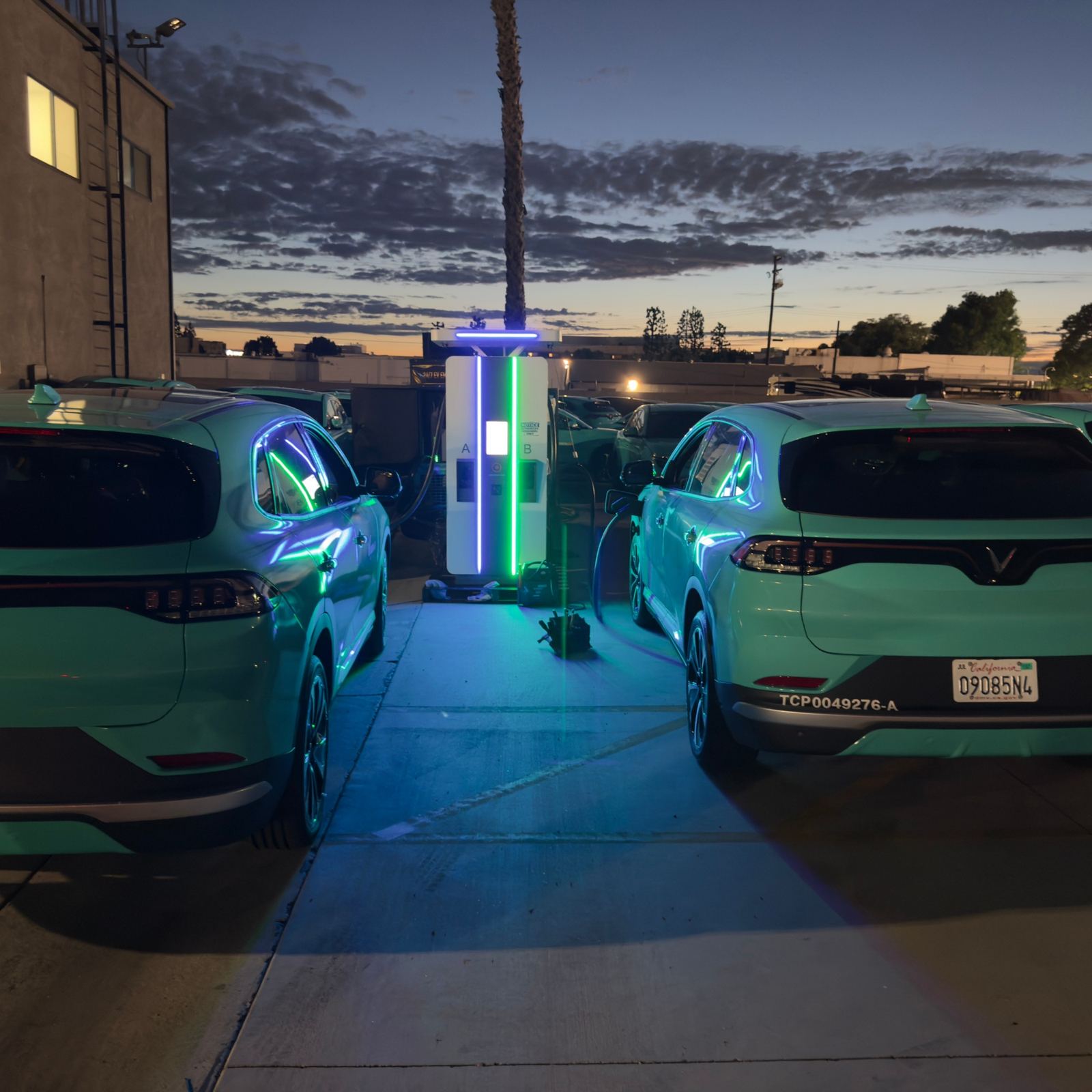
Depot charging at dusk, fleet lined up behind 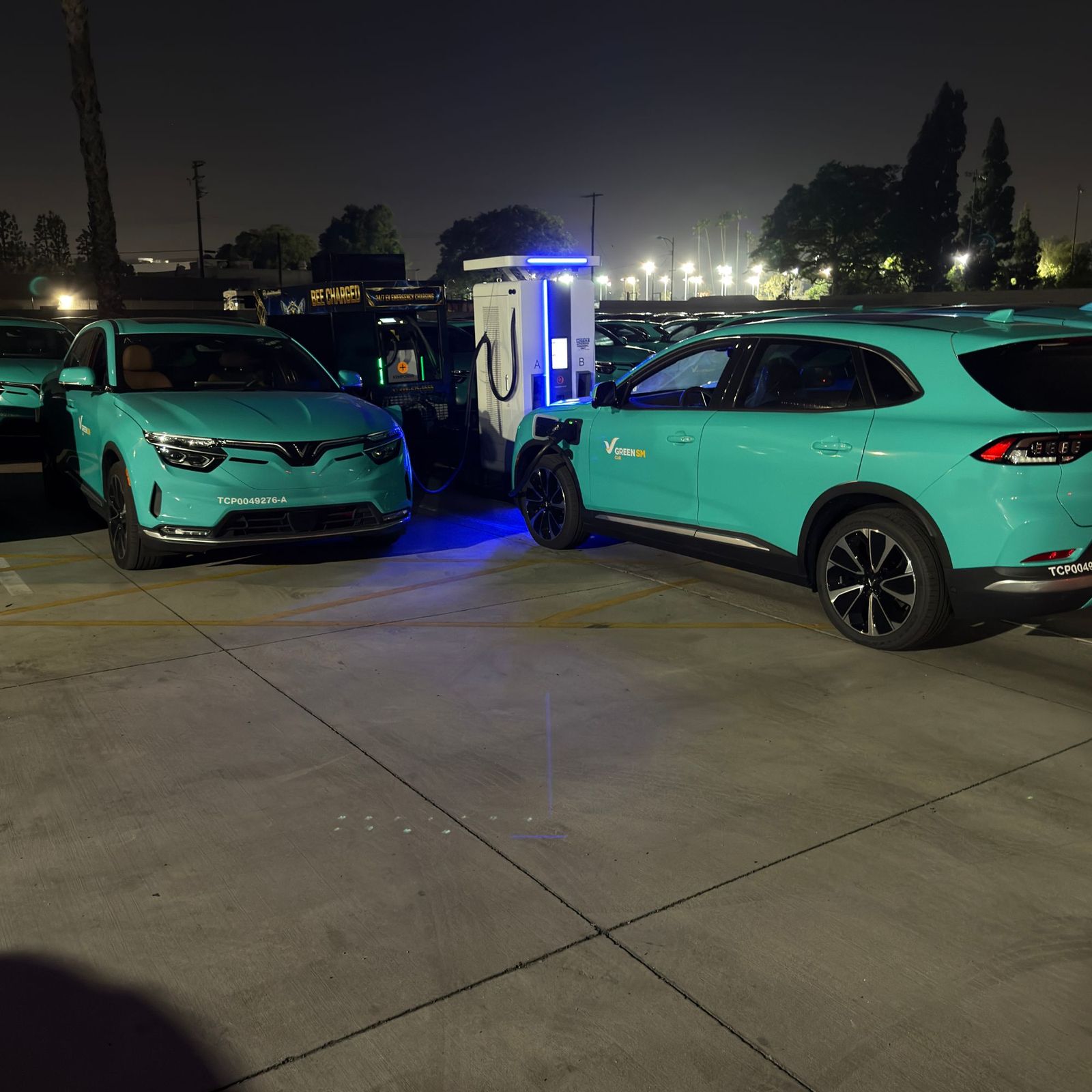
Depot charging for a ride-hail fleet, overnight window 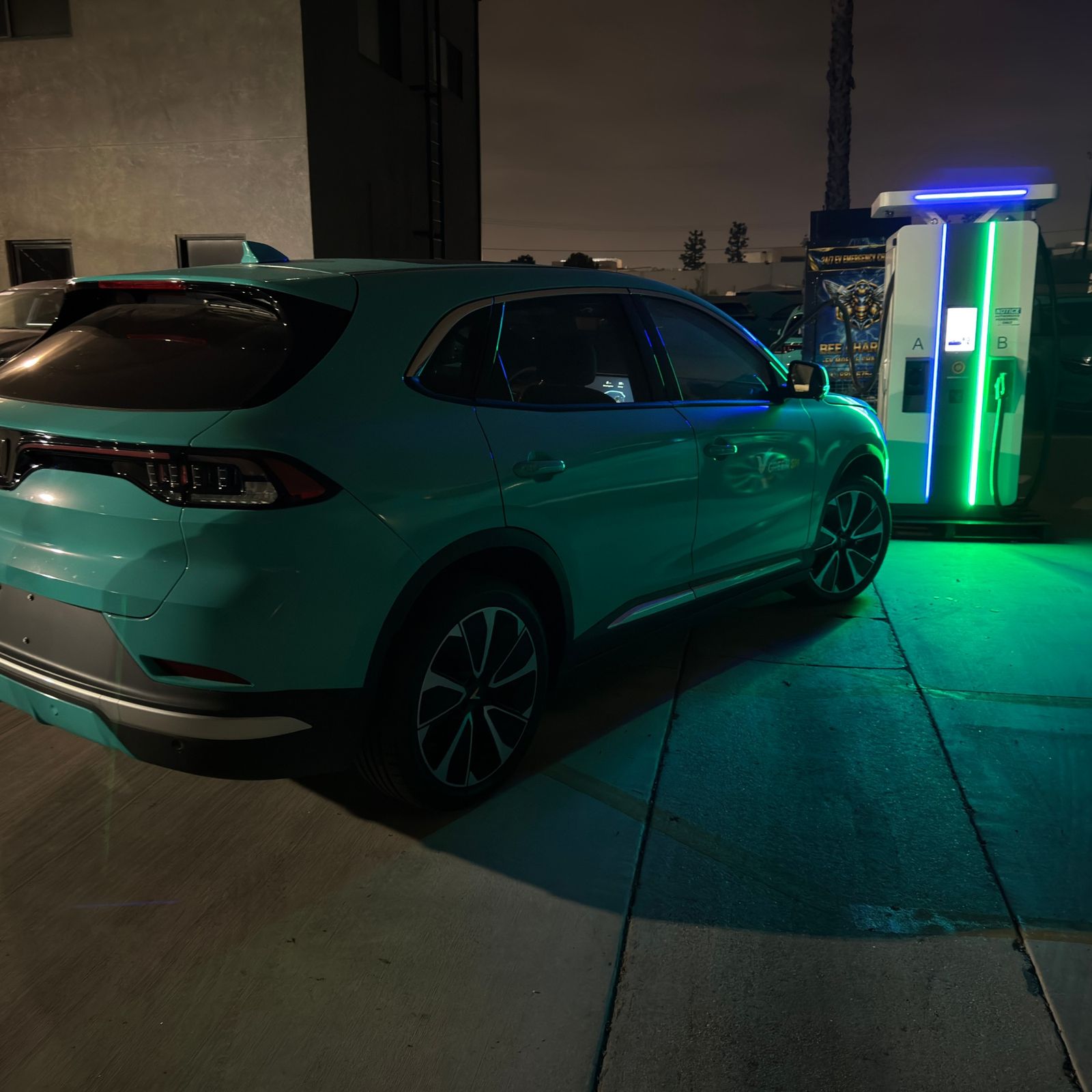
Fleet SUV on a mobile DC dispenser
FAQ
Autonomous questions, answered.
Can the vehicles plug themselves in?
Not yet. Robotaxis rely on depot staff or automation for charging. We design port layouts for fast attendant plug-in today, with a wireless or robotic upgrade path when the fleet is ready.
How many ports can one depot get?
A 700 kW block feeds about 40 ports at 150 kW with power sharing; a 1 MW+ block feeds more. Depots with hundreds of vehicles stack blocks. Founder to confirm ports per block.
What about depot leases that forbid electrical work?
Mobile blocks sit on the pad and connect at the dispenser. No trenching, no switchgear inside the building.
How do you integrate with our fleet software?
OCPP 2.0.1 for charger control and telemetry, ISO 15118 for Plug & Charge, and a REST feed from the NOC for session data.
What term do you require?
Term length is set in your quote, from a short pilot to a multi-year agreement. Blocks relocate if the depot moves.
How fast is the response if a port fails?
24 hours or less to respond, with the SLA replacement target and credits. Depots at this scale get a named escalation contact.
Start here
Get a autonomous Site Power Plan in 48 hours.
kW, kWh, blocks, layout and days-to-live for your site. Free, whether or not you buy. Three fields to start.
Prefer the phone?
888-675-9555